Septic rules in Michigan
In short
- Michigan has no statewide septic code: your local health department sets the rules.
- State minimum distance from a private well: 50 feet.
- Only state-licensed septage haulers may pump a tank.
- State guidance: inspect every three years, pump typically every three to five.
- A state loan program helps replace failing systems.
Who sets the septic rules for a Michigan home, what the state does and does not regulate, and where a homeowner can get help paying for a failing system. Each answer links to the document it comes from.
Who makes the rules in Michigan
-
Is there one septic code for the whole state?
No. Michigan has no comprehensive statewide septic code. The rules come from county and local regulations.
Details and source
This is why the permit steps, fees and inspection rules change from one county to the next. A bill to create a statewide code, Senate Bill 771, was reported as a current effort in June 2026; check its status before relying on this answer.
The source says: “Michigan stands alone as the only state in the country without a comprehensive statewide code regulating onsite wastewater treatment systems”
Source: Lawmakers push Michigan's first septic code (June 12, 2026) -
Who approves a septic system for a house?
Your local health department, under its own local sanitary code.
Details and source
EGLE's guide says small sanitary sewage discharges, under 1,000 gallons per day, are approved by the local health department under the local sanitary code. Start with the health department for the county where the property sits.
The source says: “discharges of less than 1,000 gallons per day (gpd), approved by the LHD in accordance with the requirements of the local sanitary code”
Source: Wastewater Permitting Authorities Explained: A Guide for Local Health Departments (September 2026) -
Do the state's own septic criteria apply to a single-family home?
No. The Michigan Criteria for Subsurface Sewage Disposal say they do not apply to private single and two family home systems built under local sanitary codes.
Details and source
For a house, the local sanitary code is the document to read.
The source says: “These criteria do not apply to private single and two family residential sewage systems constructed pursuant to local sanitary codes.”
Source: Michigan Criteria for Subsurface Sewage Disposal -
What does the state agency (EGLE) do, then?
EGLE's Onsite Wastewater Management Unit contracts each year with local health departments, oversees them through the state accreditation program, and gives them training and help.
Details and source
EGLE names two areas where it assists local health departments with reviews: land developments that use onsite systems, and large systems discharging up to 10,000 gallons per day. A homeowner's permit questions go to the local health department.
The source says: “The State of Michigan contracts annually with local health departments and provides contract oversight through the Michigan Local Public Health Accreditation Program.”
Source: Onsite wastewater management
Money and home sales
-
Is a septic inspection required when a home is sold?
Michigan has no statewide septic code that would set one. No state source was found that addresses inspections at sale; counties and local health departments have their own rules.
Details and source
Ask the local health department before you list or make an offer. In Kent County, for example, the health department offers a Real Estate Evaluation of well and septic that it describes as often required before selling an existing building. This page reports rules and is not legal advice.
The source says: “The state currently relies on a patchwork of county and local regulations”
Source: Lawmakers push Michigan's first septic code (June 12, 2026)
-
Is there state help to pay for replacing a failing system?
Yes. The Septic Replacement Loan Program offers low interest loans to replace failing and near failing septic systems. EGLE says both loan tiers are now available to homeowners.
Details and source
The legislature appropriated 35 million dollars for the program. Michigan Saves, a non-profit lender, manages it. Tier 1 is income-based financing and Tier 2 is a market based loan; EGLE describes the program as low interest and this page does not state a rate. The system must be installed by a Michigan Saves Authorized Contractor and meet EGLE's Program Minimum Standards. Homeowners apply through Michigan Saves.
The source says: “Both Tier 1 and Tier 2 loans are now available to homeowners.”
Source: Septic Replacement Loan Program
Distances the state sets
-
How far does a septic system have to be from a well?
At least 50 feet from a single family private well under the state Well Construction Code. Some local sanitary codes require more.
Details and source
Your local health department can tell you the distance that applies to your lot.
The source says: “the Well Construction Code set a minimum isolation requirement of 50’ between a single family private well and a septic system”
Source: FAQ: Septic systems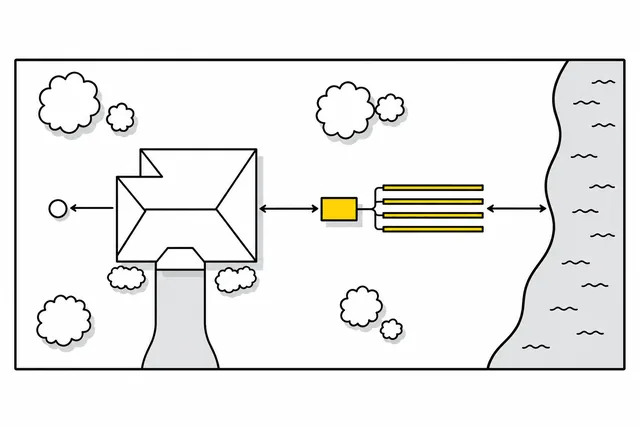
-
How far does a septic system have to be from a lake or river?
No less than 50 feet anywhere in Michigan. It can be up to 100 feet in a subdivision or condominium development, and some counties require 75 to 100 feet.
Details and source
The distance depends on the type of system and the rules that apply where you live, so confirm it with the local health department before planning work near water.
The source says: “no less than 50’ in any jurisdiction but can be up to 100’ for septic systems in a subdivision or condominium development”
Source: FAQ: Septic systems
Pumping, upkeep and failures
-
Who is allowed to pump a septic tank?
Septage haulers are licensed under state law. EGLE runs the septage program with participating county health departments and publishes a hauler directory.
Details and source
The licensing law is Part 117, Septage Waste Servicers, of the Natural Resources and Environmental Protection Act. EGLE's septic FAQ points homeowners to its Septage Hauler Directory to find a company to pump a tank.
The source says: “The licensing and handling of domestic septage is regulated under 2004 Public Act 381, which amended Part 117, Septage Waste Servicers”
Source: Septage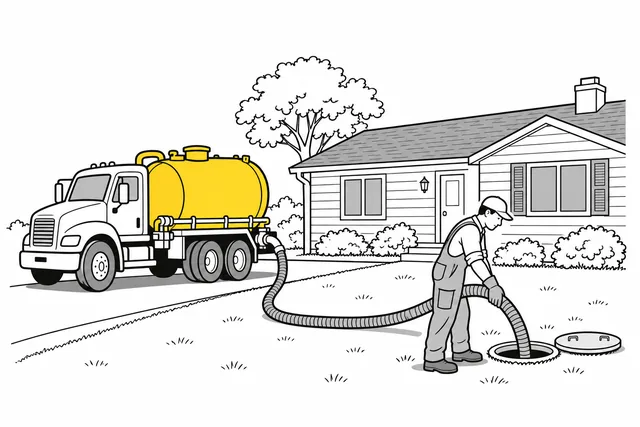
-
How often should a septic system be inspected and pumped?
EGLE's guidance is that homeowners should generally have the system inspected every three years and pump the tank when necessary, typically every three to five years.
Details and source
This is guidance, and EGLE adds that local health department recommendations may differ.
The source says: “Tanks should be pumped when necessary, typically every three to five years.”
Source: SepticSmart -
What counts as a failed septic system?
EGLE's onsite unit and local health departments refer to a definition under which a system has failed when sewage backs up into the home, comes to the ground surface, or contaminates surface water or drinking water, among other cases.
Details and source
The definition also covers a bypassed system, an illicit discharge, a missing absorption system, and a structural failure of the tank. If you suspect a failure, EGLE says to contact your local health department for guidance on how to proceed.
The source says: “A system is considered to have failed when sewage backs up into the home or structure, discharges to the ground surface, contaminates surface water”
Source: FAQ: Septic systems
Septic rules by county in Michigan
Which agencies regulate septic in Michigan
- Michigan Department of Environment, Great Lakes, and Energy (EGLE), Onsite Wastewater Management UnitContracts with and oversees local health departments, publishes state criteria and guidance, runs the Septic Replacement Loan Program and the septage hauler licensing program.
Official website - Local health departments (county, district or city)Approve and permit septic systems for homes under their own local sanitary codes. EGLE's FAQ sends homeowners to the Michigan Association for Local Public Health directory to find theirs.
Official website
More facts for Michigan
- Local public health departments in Michigan (EGLE report, November 2024)
- 45
- Source: Michigan 2023 Statewide Failed Sewage System Evaluation Summary Report (November 2024)
- State appropriation for the Septic Replacement Loan Program (EGLE)
- 35 million dollars
- Source: Septic Replacement Loan Program
Sources for this page (9)
- Lawmakers push Michigan's first septic code (June 12, 2026)
Michigan State University, MSUToday. Retrieved . - Wastewater Permitting Authorities Explained: A Guide for Local Health Departments (September 2026)
Michigan Department of Environment, Great Lakes, and Energy (EGLE). Retrieved . - Michigan Criteria for Subsurface Sewage Disposal
Michigan Department of Public Health; hosted by EGLE. Retrieved . - Onsite wastewater management
Michigan Department of Environment, Great Lakes, and Energy (EGLE). Retrieved . - Septic Replacement Loan Program
Michigan Department of Environment, Great Lakes, and Energy (EGLE). Retrieved . - FAQ: Septic systems
Michigan Department of Environment, Great Lakes, and Energy (EGLE). Retrieved . - Septage
Michigan Department of Environment, Great Lakes, and Energy (EGLE). Retrieved . - SepticSmart
Michigan Department of Environment, Great Lakes, and Energy (EGLE). Retrieved . - Michigan 2023 Statewide Failed Sewage System Evaluation Summary Report (November 2024)
Michigan Department of Environment, Great Lakes, and Energy (EGLE). Retrieved .
Rules change. The linked official document is the authority, this page is a summary of it and is not legal advice.