Septic rules in Kent County, Michigan
In short
- Septic permits come from the Kent County Health Department: (616) 632-6900.
- Repairs need a permit too: $300. A new system: from $250.
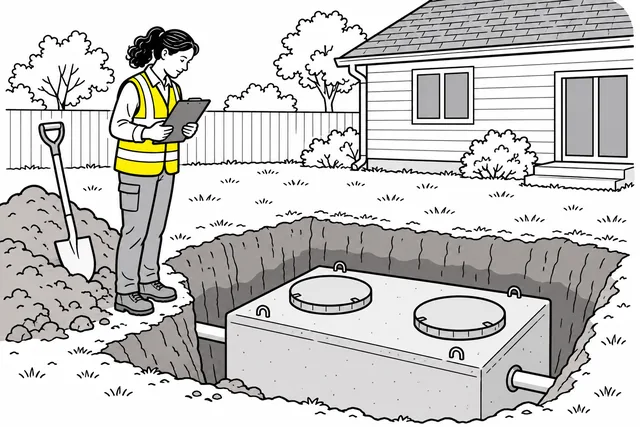
- The work is inspected before it is covered.
- A home-sale evaluation costs $250 or $295 and is done on request.
- Permits last 2 years and do not transfer to a new owner.
Who issues septic permits in Kent County, what the health department checks before you build, sell or add on, and the charges the county publishes on its Septic & Well page. Every answer links to the county page it comes from.
Kent County septic fees at a glance
| Site evaluation | $200 |
|---|---|
| Septic permit, new systemMay require a site evaluation | $250 |
| Septic permit, repair or replacement | $300 |
| Septic permit, tank only | $150 |
| Pressurized mound systemMay be required after the site visit | $400 |
| Home-sale evaluation, septic and well | $295 |
| Home-sale evaluation, septic onlyHome on municipal water | $250 |
From the county's two application forms, read on November 16, 2026. The forms carry no date. If the site visit shows a mound or advanced system is needed, additional fees apply.
Source: Application for Residential Septic/Well Project (PDF)Permits and what they cost
-
Who issues the septic permit?
The Kent County Health Department. Its Environmental Health program takes the well and septic permit applications.
Details and source
The county calls it an On-Site Sewage Disposal permit. Applications for homes use the Residential Well and Septic Permit Application posted on the county's Septic & Well page.
The source says: “Required permit for installation of on-site sewage disposal (septic) systems.”
Source: Septic & Well (Permits & Evaluations) -
When do I need a permit?
Before anyone constructs, repairs, enlarges or relocates a septic system in Kent County, a permit from the health department is required. Repairs need one too.
Details and source
The regulations allow an exception when the work is of such a minor nature that the Health Officer judges a permit unnecessary, so ask the department before assuming a job is too small. For new construction the application must include a detailed site plan and floorplans.
The source says: “Before any person shall construct, repair, enlarge, or relocate any sewage disposal facility serving any premise within Kent County, he shall first obtain a permit”
Source: Sewage Disposal Regulations for Kent County, Michigan (as amended 2002, Resolution 3-28-02-34) -
What does a septic permit cost in Kent County?
On the county's residential application: Site Evaluation $200, Septic Tank Only $150, Septic (New) $250, Septic (Repair/Replacement) $300, Pressurized Mound System $400.
Details and source
A new septic permit may require a Site Evaluation, and a pressurized mound system may be required after the site visit. If the visit shows that a mound or advanced system is needed, additional fees apply. The form carries no date; these are the amounts on the copy read on November 16, 2026.
The source says: “If after site visit for a conventional system, it is determined a Mound or Advanced system is needed, additional fees will apply.”
Source: Application for Residential Septic/Well Project (PDF)
-
How long is a permit or site evaluation good for?
2 years. Permits and site evaluations cannot be transferred.
Details and source
If you buy land that already has a permit or an evaluation, ask the health department whether you need a new one, because they do not transfer to a new holder. The regulations let the Health Officer approve an extension of a permit when one is requested.
The source says: “Permits and site evaluations are valid for 2 years and are non-transferrable.”
Source: Septic & Well (Permits & Evaluations) -
What charges does the county list besides the application fee?
A missed appointment may cost $75. Canceling an application before fieldwork costs a $50 processing fee. Application fees are non-refundable after 90 days or once field work has started.
Details and source
These amounts are from the county's Septic & Well page as read on November 10, 2026; the page carries no schedule year. The page also says a convenience fee applies to all credit and debit card payments from October 1, 2026.
The source says: “A $50 processing fee applies to all applications canceled prior to fieldwork.”
Source: Septic & Well (Permits & Evaluations)
Building or repairing a system
-
Is the land checked before a system is approved?
Yes. The county runs a Site Evaluation to decide whether a property is suitable for the planned development and for an on-site well and septic system.
Details and source
A site evaluation is valid for 2 years. Underground utilities must be marked through MISS DIG before the county's site visit (see below).
The source says: “Program to determine if the property is suitable for a particular type of development and suitable for on-site well and septic systems.”
Source: Septic & Well (Permits & Evaluations) -
Does the county inspect the work before it is covered?
Yes. No septic system or part of one may be given a final cover until a final inspection has taken place, and it may not be used until the Health Officer has approved it.
Details and source
The regulations say the Health Officer shall attempt to respond to a request for a final inspection within two working days. The inspection may be waived if the work can be verified by other means. (Sections 506.2 and 507.)
The source says: “No sewage disposal facility or component thereof shall be given a final cover, or otherwise rendered inaccessible, until a final inspection has taken place”
Source: Sewage Disposal Regulations for Kent County, Michigan (as amended 2002, Resolution 3-28-02-34)
-
How big does the septic tank have to be?
For a house with 3 bedrooms or fewer: 1,500 gallons of total tank capacity. For 4 bedrooms: 1,750 gallons. Add 250 gallons for each additional bedroom.
Details and source
Every new system needs at least two septic tanks connected in series. Existing tanks that do not conform may remain in service without modification if the Health Officer finds them acceptable. (Sections 603.1.2, 603.1.3 and Table VI-B.)
The source says: “At least two septic tanks, connected in series, shall be required for every new sewage disposal facility.”
Source: Sewage Disposal Regulations for Kent County, Michigan (as amended 2002, Resolution 3-28-02-34) -
How far must the system be from a well, a lake or the property line?
Septic tank and drainfield: 50 feet from a potable water well, 50 feet from a lake, stream or river, 10 feet from the property boundary and 10 feet from a basement wall.
Details and source
These are the minimums in Table VI-A of the county regulations for a home system. Seepage pits have larger distances (75 feet from a well, 100 feet from a lake, stream or river). A well that is a Type II-B water supply needs 75 feet.
Source: Sewage Disposal Regulations for Kent County, Michigan (as amended 2002, Resolution 3-28-02-34)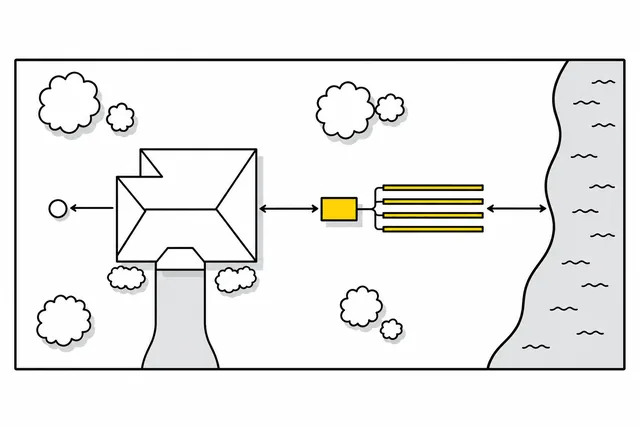
-
What happens if my septic system fails?
It is unlawful to discharge sewage onto the ground surface or into a lake, river, stream or ditch. The Health Officer may order a correction and set a reasonable time limit, and may require immediate action where there is an imminent danger to public health.
Details and source
The regulations set no fixed deadline; it is decided case by case. The repair itself needs a permit. The regulations provide for a petition for a hearing within 20 days of receipt of a notice, order, citation or decision; ask the health department how to file. (Sections 301, 408 and 1001.)
The source says: “The Health Officer may also order correction of a violation and may specify the nature of corrective action required and a reasonable time limit”
Source: Sewage Disposal Regulations for Kent County, Michigan (as amended 2002, Resolution 3-28-02-34) -
What has to happen before the county visits my property?
Underground utilities must be marked through MISS DIG before the site visit. Whoever will dig on site has to submit the MISS DIG ticket.
Details and source
The county says unmarked properties will result in delay or postponement of service.
The source says: “All services require marking by MISS Dig for underground utilities prior to the site visit.”
Source: Septic & Well (Permits & Evaluations)
Selling or buying a home
-
Is a septic inspection required when I sell my house?
The county's own guidelines describe its evaluation as a public service done on request, usually at the request of a building owner, a realtor, a buyer and realtor, or a lending institution. The county's web page says it is often required before selling an existing building.
Details and source
Where the evaluation notes deficiencies, its recommendations do not constitute a violation notice or an order to correct unless otherwise stated. The guidelines are dated June 1998 and were revised March 27, 2000. This page reports the county's wording and is not legal advice.
The source says: “usually performed at the request of a building owner, realtor, a buyer and realtor or a lending institution”
Source: Sanitary Facility Evaluation Guidelines (PDF, June 1998, revised March 27, 2000)
-
What does the county's home-sale evaluation cost?
On the county's application: Septic & Well Evaluation $295, Septic Evaluation for a home on municipal water $250, Well Evaluation for a home on sewer $295.
Details and source
The form says the well and the septic system cannot be evaluated independently of one another if both exist on the property. The form carries no date; these are the amounts on the copy read on November 16, 2026.
The source says: “Please note that the Well & Septic cannot be evaluated independent of one another if both exist on-site.”
Source: Application for Sanitary Facility/Real Estate Evaluation (PDF)
Sewer, records and land
-
Do I have to connect to public sewer if it reaches my street?
A newly built home must use public sewer when it is available and has capacity. An existing home may be required to connect by order of its city, village or township once sewer becomes available.
Details and source
The county regulations give no distance and no deadline, so the answer for an existing home depends on your city or township. The health department may also require connection when continued use of a septic system would be a hazard to public health. (Section 305.)
The source says: “Existing premises may be required to connect to public sewers by order of the local city, village or township, upon such public sewers becoming available.”
Source: Sewage Disposal Regulations for Kent County, Michigan (as amended 2002, Resolution 3-28-02-34)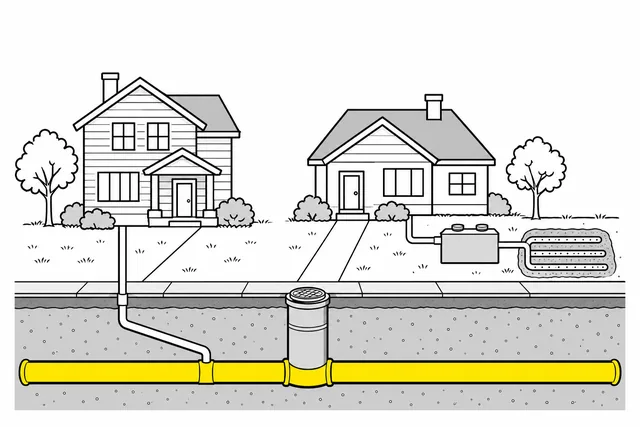
-
I'm adding on to my house or changing its use. Does the septic system get reviewed?
The county has an Addition / Change of Use review that looks at how the project may affect the existing well and septic system.
Details and source
The request form (Request for Environmental Health Addition/Change of Use Review) is posted on the county's Septic & Well page. Your township or city building office can tell you whether it wants this review before issuing a building permit.
The source says: “Review of proposed construction/change of use projects and how they may impact existing water wells and onsite sewage disposal systems.”
Source: Septic & Well (Permits & Evaluations) -
Where are the records for my existing septic system?
With the Kent County Health Department. The county's Public Works department says it does not manage septic systems and points well and septic records to the health department.
Details and source
Public sewer records are kept elsewhere: by your city, by the North Kent Sewer Authority for Plainfield, Cannon, Courtland and Alpine townships, by the Byron Gaines Sewer Authority, and by the township for the others.
The source says: “we do not manage sewer/water mains or septic systems”
Source: FAQ: I need records for sewer / water mains or septic. Can you help? -
I want to split my land. Does the health department review it?
Yes for small lots. The county reviews proposed land divisions that will use septic systems or private wells, and state law requires health department review of all divisions under one acre, subdivisions and site condominiums.
Details and source
The county posts a Subdivisions, Site Condominiums & Land Division Evaluation Application on its Septic & Well page.
The source says: “requires that all divisions of land under one acre, subdivisions, and site condominiums be reviewed by the local health department”
Source: Septic & Well (Permits & Evaluations) -
Can nearby contamination affect my permit?
It may. The county says known contamination in soil or groundwater near or on a property may factor into its decision when evaluating or issuing a permit.
Details and source
The county points property owners to EGLE's RIDE Mapper to see how close a property is to potential sources of contamination.
The source says: “may factor into the public health decision-making process when evaluating or issuing a permit for a property”
Source: Septic & Well (Permits & Evaluations)
The office that decides in Kent County
Kent County Health Department, Environmental Health
Their own published phone line: (616) 632-6900
State-licensed septage haulers with a Kent County listing
The 11 active, licensed septage haulers that the state agency EGLE lists with Kent as the county in its Septage Hauler Directory (directory last refreshed November 13, 2026). The directory does not say where each company works; the town shown is the address in the directory. Not ranked, not rated, not endorsed, and not paid to appear.
- Rick's Septic Tank Service Address on the list: Gowen, Michigan
- GFL Environmental Services USA LLC Address on the list: Byron Center, Michigan
- Stoneybrook Sanitation Inc (Fuller Septic Services) Address on the list: Lowell, Michigan
- Tri County Septic Address on the list: Drummond Island, Michigan
- Septic Works (Septic Division) Address on the list: Cedar Springs, Michigan
- Greenshield Dumpster LLC Address on the list: Kentwood, Michigan
- Plummer's Septic Tank Inc Address on the list: Grand Rapids, Michigan
- Pitsch Company Address on the list: Grand Rapids, Michigan
- Meyerink Trenching Service LLC Address on the list: Middleville, Michigan
- Sunshine Sewer & Septic Services LLC Address on the list: Lowell, Michigan
- Bob's Septic Service Address on the list: Sparta, Michigan
More facts for Kent County
- Kent County population (Census Bureau estimate, July 1, 2024)
- 673,002
- Source: Subcounty Resident Population Estimates: April 1, 2020 to July 1, 2024 (Michigan file, Vintage 2024)
- Charge the county may apply for a missed appointment
- $75
- Source: Septic & Well (Permits & Evaluations)
- After this many days from the application date, application fees are non-refundable
- 90 days
- Source: Septic & Well (Permits & Evaluations)
- Date from which a convenience fee applies to credit and debit card payments
- October 1, 2026
- Source: Septic & Well (Permits & Evaluations)
Need septic work done? Pick your town in Kent County
- Ada TownshipSeptic pumping, repair and backups
- Byron TownshipSeptic pumping, repair and backups
- Caledonia TownshipSeptic pumping, repair and backups
- Cannon TownshipSeptic pumping, repair and backups
- Courtland TownshipSeptic pumping, repair and backups
- Lowell Charter TownshipSeptic pumping, repair and backups
- Plainfield TownshipSeptic pumping, repair and backups
- Solon TownshipSeptic pumping, repair and backups
- Sparta TownshipSeptic pumping, repair and backups
Sources for this page (7)
- Application for Residential Septic/Well Project (PDF)
Kent County Health Department, Environmental Health Division. Retrieved . - Septic & Well (Permits & Evaluations)
Kent County Health Department. Retrieved . - Sewage Disposal Regulations for Kent County, Michigan (as amended 2002, Resolution 3-28-02-34)
Kent County Health Department, Environmental Health Division. Retrieved . - Sanitary Facility Evaluation Guidelines (PDF, June 1998, revised March 27, 2000)
Kent County Health Department, Environmental Health Division. Retrieved . - Application for Sanitary Facility/Real Estate Evaluation (PDF)
Kent County Health Department, Environmental Health Division. Retrieved . - FAQ: I need records for sewer / water mains or septic. Can you help?
Kent County Department of Public Works. Retrieved . - Subcounty Resident Population Estimates: April 1, 2020 to July 1, 2024 (Michigan file, Vintage 2024)
U.S. Census Bureau. Retrieved .
Rules change. The linked official document is the authority, this page is a summary of it and is not legal advice.