Septic pumping and repair in Byron Township, Michigan
In short
- Pumping: the EPA's general figure is $250 to $500. Local companies set their own prices.
- Township plan draft (2024): Rural Area parcels, over one-third of the township, are served by on-site septic systems and wells.
- A septic repair or replacement needs a Kent County permit: $300.
- Township ordinance copy (2008): a septic home connects to an available sewer once its system fails (sewer within 200 feet).
- Backup on public sewer: the sewer authority prints (616) 971-0002; after hours the township prints 616-248-5024.
For Byron Township and Byron Center homes with a full tank, a failing septic system or sewage coming back up: where the township's plan says homes rely on septic systems, what its water and sewer ordinance requires, and who answers when a home is on public sewer.
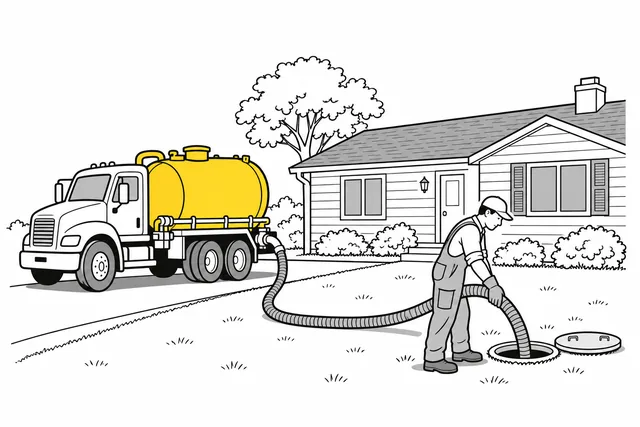
Septic tank pumping in Byron Township
Byron Township's water and sewer ordinance, in the copy the township posts, says septage pumped from a private system in the township shall not be applied to any land or body of water in the township. It must be taken to the City of Wyoming Sewage Treatment Plant or another approved public septage treatment facility.
Ask the pumping company where the load is taken. The posted copy is marked Revised 01/08/2008 and its ordinance number and adoption date are blank.
Source: Water & Sanitary Sewer Ordinance (the copy the township posts, marked Revised 01/08/2008), Section 904, Disposal of Septage WasteRelated rules
Septic repair or replacement in Byron Township
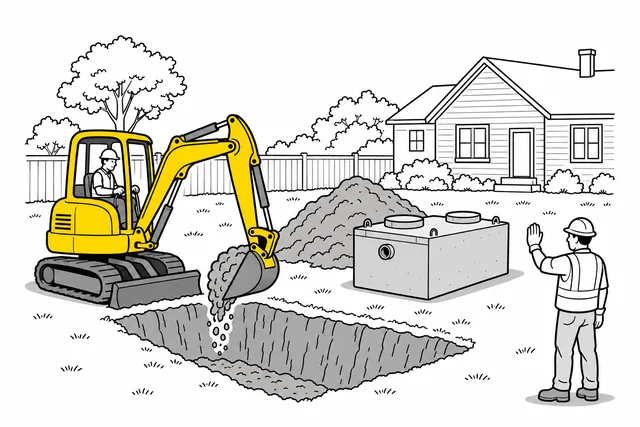
In Byron Township a failed septic system may have to give way to a sewer connection. Under the posted township ordinance, a home on septic must connect to an available public sewer once its system fails, as determined by the Health Department, or once new septic facilities are required.
The ordinance counts a public sewer as available when it has sufficient capacity, runs in a right-of-way or easement that crosses or abuts the property, and passes not more than 200 feet from the building. Where no public sewer is available, the repair goes through the Kent County Health Department, whose residential application lists the Septic (Repair/Replacement) permit at $300. The township's plan draft says new sewer extensions are typically undertaken in response to resident requests stemming from failing septic systems, with the costs supported by special assessment.
Source: Water & Sanitary Sewer Ordinance (the copy the township posts, marked Revised 01/08/2008), Section 1008, Connection of Existing Improved Properties to Sewer SystemRelated rules
Sewage backing up in a Byron Township home
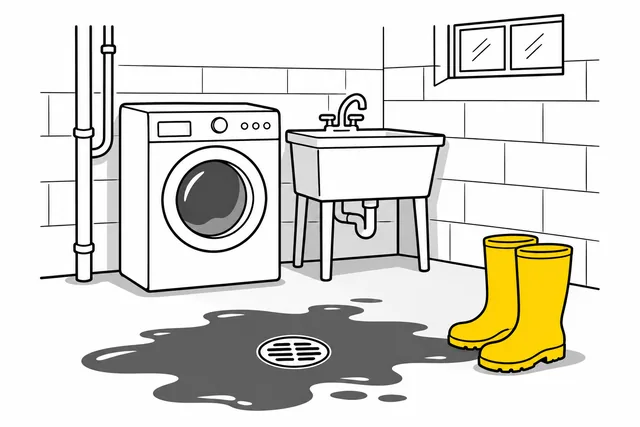
What the Byron-Gaines Utility Authority (BGUA) says to do, and who to contact:
- Do not allow children or pets into the area (BGUA handout). The EPA warns that sewage may contain harmful pathogens.
- Home on public sewer: call BGUA and it will check its sewer mains. Its published office number is (616) 971-0002, Monday to Thursday 7:00am to 4:30pm, Friday 8:00am to 12:00pm.
- After hours: the township's Water & Sewer page prints an after hours water and sanitary sewer emergency number, 616-248-5024. BGUA's website prints the same number.
- If the main is clear, BGUA says the homeowner would need to call a plumber. BGUA's Sewer page says the home is responsible for the piping from the home to the sewer main; its handout treats the lateral on the right-of-way side of the property line as public.
- Home on septic: the EPA says to contact your local health department. Kent County Health Department's permit form prints (616) 632-6900 and states no office hours.
If BGUA finds the cause in the public main or the public portion of the sewer lateral, its handout says claims must be received in writing within 45 days of the sewer backup event.
Source: SewerRelated rules
Septic inspection for a home sale in Byron Township
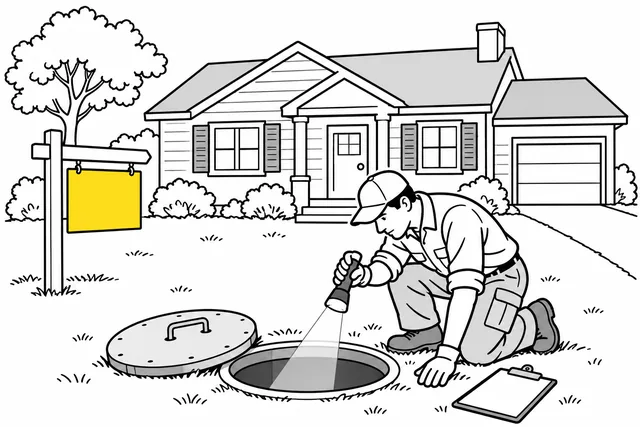
Before buying a Byron Township home on septic, check how close public sewer is. The posted township ordinance lists five events that require such a home to connect to an available public sewer, including a failed system and an addition equal to 50% or more of the existing structure.
Ask the seller whether a public sewer passes near the house. The township's Water & Sewer Department prints 616-878-0660. The county says its evaluation is often required before selling an existing building; the Kent County page explains what that means.
Source: Water & Sanitary Sewer Ordinance (the copy the township posts, marked Revised 01/08/2008), Section 1008, Connection of Existing Improved Properties to Sewer SystemRelated rules
Sewer or septic in Byron Township
-
Is my part of Byron Township on public sewer?
The township's Master Plan update, a file marked Update Draft 1.4.24, says the sewer system serves most of the developed portions of the community. It says the Rural Area, covering over one-third of the township, has agricultural land and residential parcels served by on-site septic systems and wells.
Details and source
The same draft says much of the land within its Suburban Area is not served by public water and sewer. The township's building permit checklist says that in a non-public water or sewer area the permit is issued by the Kent County Health Department. The township also posts a Utility Systems Map that draws the sanitary sewer lines and a sanitary sewer district limit; it is a drawing with no street list, last revised 1-1-19. For one address, ask the township's Water & Sewer Department, which prints 616-878-0660.
The source says: “Agricultural land and residential parcels are served by on-site septic systems and wells.”
Source: Byron Township Master Plan Update (cover: Adopted 1.23.17, Amended 2.26.18, Update Draft 1.4.24), Byron Tomorrow: Rural Area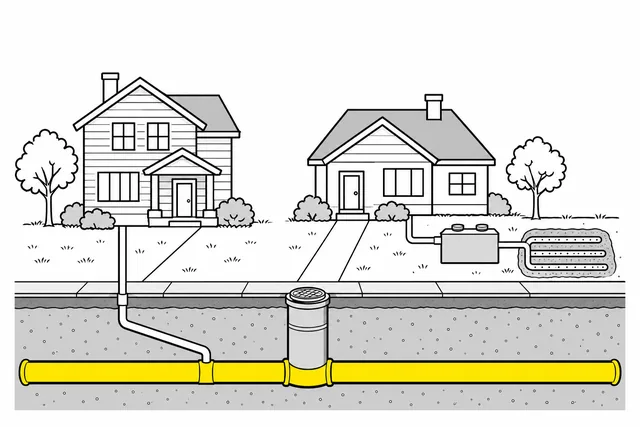
-
Do I have to connect when public sewer is near my home?
Under the posted ordinance, an existing home on septic is not required to connect to an available public sewer until one of five events. A public sewer is available when it has sufficient capacity, runs in a right-of-way or easement that crosses or abuts the property, and passes not more than 200 feet from the building.
Details and source
The five events: new septic facilities are required; the existing ones fail, as determined by the Health Department; a residence changes to a non-residential use; an addition equals 50% or more of the existing structure; or the township declares connection of all improved properties in the area a necessity. After such a declaration, connections must be completed no later than 12 months after the later of the township's official notice or the modification of the structure. The Township Board or the Health Department can require a shorter period for reasons of public health. An owner may connect at any time. The copy is marked Revised 01/08/2008, so confirm the current text with the township.
The source says: “shall not be required to connect to an Available Public Sewer until such time as”
Source: Water & Sanitary Sewer Ordinance (the copy the township posts, marked Revised 01/08/2008), Sections 301(3), 1008 and 1009 -
What does the township require of a home on septic?
The posted ordinance says the owner shall operate and maintain a private septic system in a sanitary manner at all times, in accordance with applicable regulatory requirements, with no expense to the township.
Details and source
The system must comply with the regulations of the township, the Health Department (defined in the ordinance as the Kent County Health Department) and all other agencies having jurisdiction. Septage pumped from it has to go to the City of Wyoming plant or another approved public septage treatment facility.
The source says: “The owner shall operate and maintain private Sewage Disposal Facilities in a sanitary manner at all times”
Source: Water & Sanitary Sewer Ordinance (the copy the township posts, marked Revised 01/08/2008), Article 9, Sections 902 to 904 -
What happens to the old septic tank when I connect to sewer?
The posted ordinance says that when connection to the public sewer is made, the private septic system shall be pumped and abandoned. After pumping it is removed, crushed and stabilized, or filled in place with sand or gravel.
Details and source
The sub-surface disposal field may be left in place as is, subject to any applicable regulatory requirements that are more restrictive. BGUA says it inspects all new connections to the township sewer system, from the main to the entrance into the home.
The source says: “At such time as connection to the Public Sewer is made, any private Sewage Disposal Facilities shall be pumped and abandoned.”
Source: Water & Sanitary Sewer Ordinance (the copy the township posts, marked Revised 01/08/2008), Section 905, Abandonment -
Who runs the public sewer, and who sends the bill?
The Byron-Gaines Utility Authority, formed in 2002, operates and maintains the water and sewer systems for Byron Township and Gaines Charter Township. BGUA reads the meters; the township sends the bill, on a quarterly schedule.
Details and source
BGUA says the majority of the sewage from the two townships goes to the City of Wyoming's Clean Water Plant, with a small portion going to Grand Rapids. The township's plan draft says the sewer system in Byron Township is owned by the township and maintained by BGUA. Billing questions go to the township's Water & Sewer Department, which prints 616-878-0660.
The source says: “We perform the operation and maintenance of the water and sewer systems for Byron Township and Gaines Charter Township.”
Source: Byron-Gaines Utility Authority (home page) -
What does public sewer cost in Byron Township in 2026?
The township's 2026 rate notice lists a Sewer Ready to Serve fee of $22.03 per quarter for 5/8, 3/4 and 1 inch meters, plus a Sewer Use Fee of $5.45 per 1,000 gallons of metered water. It also lists a Flat Rate Sewer Use Fee, Ready to Serve included, of $103.78 per quarter.
Details and source
The notice says the Township Board approved the rate study on January 26, 2026 and that the rates apply to usage from January 1, 2026. Connecting a home is a separate cost. The township's 2026 residential connection fee worksheet, marked as an estimate, lists for sewer: availability at $11,570 for the first 120 feet (300 feet for a corner lot) and $115.70 for each extra foot, trunkage of $1,175 per living unit, a lateral at $2,310 if provided, and a $100 inspection. Ask the Water & Sewer Department for the figure for your lot.
The source says: “will increase from $3.95 to $5.45 per 1,000 gallons”
Source: 2026 Water and Sewer Rates (notice) -
I'm tearing down a house that is on public sewer. What comes first?
BGUA's Abandonment/Disconnect Procedure says the owner or contractor first takes out a water/sewer permit and schedules an inspection with BGUA, giving 24-hour notice. The procedure lists $50 for a house; it is undated and written for staff, so confirm the fee. The demolition permit is pulled only after all utilities are physically separated from the structure.
Details and source
The procedure says permits are issued from the Water and Sewer Department and the demolition permit from the Building Department. It covers public water and sewer only and does not mention septic tanks.
The source says: “$50 for house, $100 for commercial/industrial”
Source: Abandonment/Disconnect Procedure (PDF)
Byron Township facts
- Byron Township population (Census Bureau estimate, July 1, 2024)
- 28,406
- Source: Subcounty Resident Population Estimates: April 1, 2020 to July 1, 2024 (Michigan file, Vintage 2024)
- Where sewage from Byron Township and Gaines Charter Township goes, per BGUA
- City of Wyoming's Clean Water Plant for the majority; a small portion to Grand Rapids
- Source: Sewer
- Who bills water and sewer, per BGUA
- BGUA reads the meters; the township bills, quarterly
- Source: Water
- Time limit for a written claim after a sewer backup caused in the public main (BGUA handout)
- 45 days
- Source: Sanitary Sewer Backup Information Sheet (PDF)
- EPA advice when a septic system backs up
- Avoid contact with the sewage; contact your local health department or regulatory agency
- Source: Resolving Septic System Malfunctions
- Byron-Gaines Utility Authority office (the authority's own published contact)
- 1381-84th St SE, Byron Center, MI 49315; (616) 971-0002; Monday to Thursday 7:00am to 4:30pm, Friday 8:00am to 12:00pm
- Source: Byron-Gaines Utility Authority (home page)
- After hours emergencies number printed on the Byron-Gaines Utility Authority's website (the authority's own published number)
- 1-616-248-5024
- Source: Byron-Gaines Utility Authority (home page)
- New sewer extensions, per the Master Plan update draft (1.4.24)
- Typically in response to resident requests stemming from failing septic systems
- Source: Byron Township Master Plan Update (cover: Adopted 1.23.17, Amended 2.26.18, Update Draft 1.4.24), Byron Today: Sanitary Sewer System
- Who issues water and sewage disposal permits, per the township's building permit checklist
- Kent County Health Department in a non-public water or sewer area
- Source: Long Form Building Permit Application, Building Permit Checklist
- Byron Township Utility Systems Map, posted by the township
- Legend includes sanitary sewer and Byron Township sanitary sewer district limit; last revision 1-1-19
- Source: Byron Township Utility Systems Map (Water & Sanitary Sewer Service Map)
- Byron Township Water & Sewer Department (the township's own published contact)
- 616-878-0660; Monday to Thursday 8 a.m. to 5 p.m., Friday 8 a.m. to noon; after hours water and sanitary sewer emergency number 616-248-5024
- Source: Water & Sewer
- Sewer items on the township's 2026 residential connection fee worksheet (an estimate)
- Availability $11,570 base, $115.70 per extra foot; trunkage $1,175; lateral $2,310; inspection $100
- Source: Residential Connection Fee Worksheet 2026
- Kent County Septic (Repair/Replacement) permit, on the county's residential application as read on November 16, 2026
- $300
- Source: Application for Residential Septic/Well Project (PDF)
- How Kent County describes its Real Estate Evaluation
- often required before selling an existing building
- Source: Septic & Well (Permits & Evaluations)
- Kent County Health Department, Environmental Health Division (the department's own published contact)
- (616) 632-6900; 700 Fuller Ave NE, Grand Rapids, MI 49503
- Source: Application for Residential Septic/Well Project (PDF)
Kent County rules that apply in Byron Township
- Who issues the septic permit?
- When do I need a permit?
- What does a septic permit cost in Kent County?
- How long is a permit or site evaluation good for?
- What charges does the county list besides the application fee?
- Is the land checked before a system is approved?
- Does the county inspect the work before it is covered?
- How big does the septic tank have to be?
- How far must the system be from a well, a lake or the property line?
- What happens if my septic system fails?
- What has to happen before the county visits my property?
- Is a septic inspection required when I sell my house?
- What does the county's home-sale evaluation cost?
- Do I have to connect to public sewer if it reaches my street?
- I'm adding on to my house or changing its use. Does the septic system get reviewed?
- Where are the records for my existing septic system?
- I want to split my land. Does the health department review it?
- Can nearby contamination affect my permit?
Sources for this page (18)
- Water & Sanitary Sewer Ordinance (the copy the township posts, marked Revised 01/08/2008), Section 904, Disposal of Septage Waste
Byron Township. Retrieved . - Why Maintain Your Septic System
U.S. Environmental Protection Agency. Retrieved . - Sewer
Byron-Gaines Utility Authority. Retrieved . - Application for Sanitary Facility/Real Estate Evaluation (PDF)
Kent County Health Department, Environmental Health Division. Retrieved . - Byron Township Master Plan Update (cover: Adopted 1.23.17, Amended 2.26.18, Update Draft 1.4.24), Byron Tomorrow: Rural Area
Byron Township. Retrieved . - Byron-Gaines Utility Authority (home page)
Byron-Gaines Utility Authority. Retrieved . - 2026 Water and Sewer Rates (notice)
Byron Township Water & Sewer Department. Retrieved . - Abandonment/Disconnect Procedure (PDF)
Byron-Gaines Utility Authority. Retrieved . - Subcounty Resident Population Estimates: April 1, 2020 to July 1, 2024 (Michigan file, Vintage 2024)
U.S. Census Bureau. Retrieved . - Water
Byron-Gaines Utility Authority. Retrieved . - Sanitary Sewer Backup Information Sheet (PDF)
Byron-Gaines Utility Authority. Retrieved . - Resolving Septic System Malfunctions
U.S. Environmental Protection Agency. Retrieved . - Long Form Building Permit Application, Building Permit Checklist
Byron Township Inspection Services. Retrieved . - Byron Township Utility Systems Map (Water & Sanitary Sewer Service Map)
Byron Township. Retrieved . - Water & Sewer
Byron Township. Retrieved . - Residential Connection Fee Worksheet 2026
Byron Township Water & Sewer Department. Retrieved . - Application for Residential Septic/Well Project (PDF)
Kent County Health Department, Environmental Health Division. Retrieved . - Septic & Well (Permits & Evaluations)
Kent County Health Department. Retrieved .
Rules change. The linked official document is the authority, this page is a summary of it and is not legal advice.